
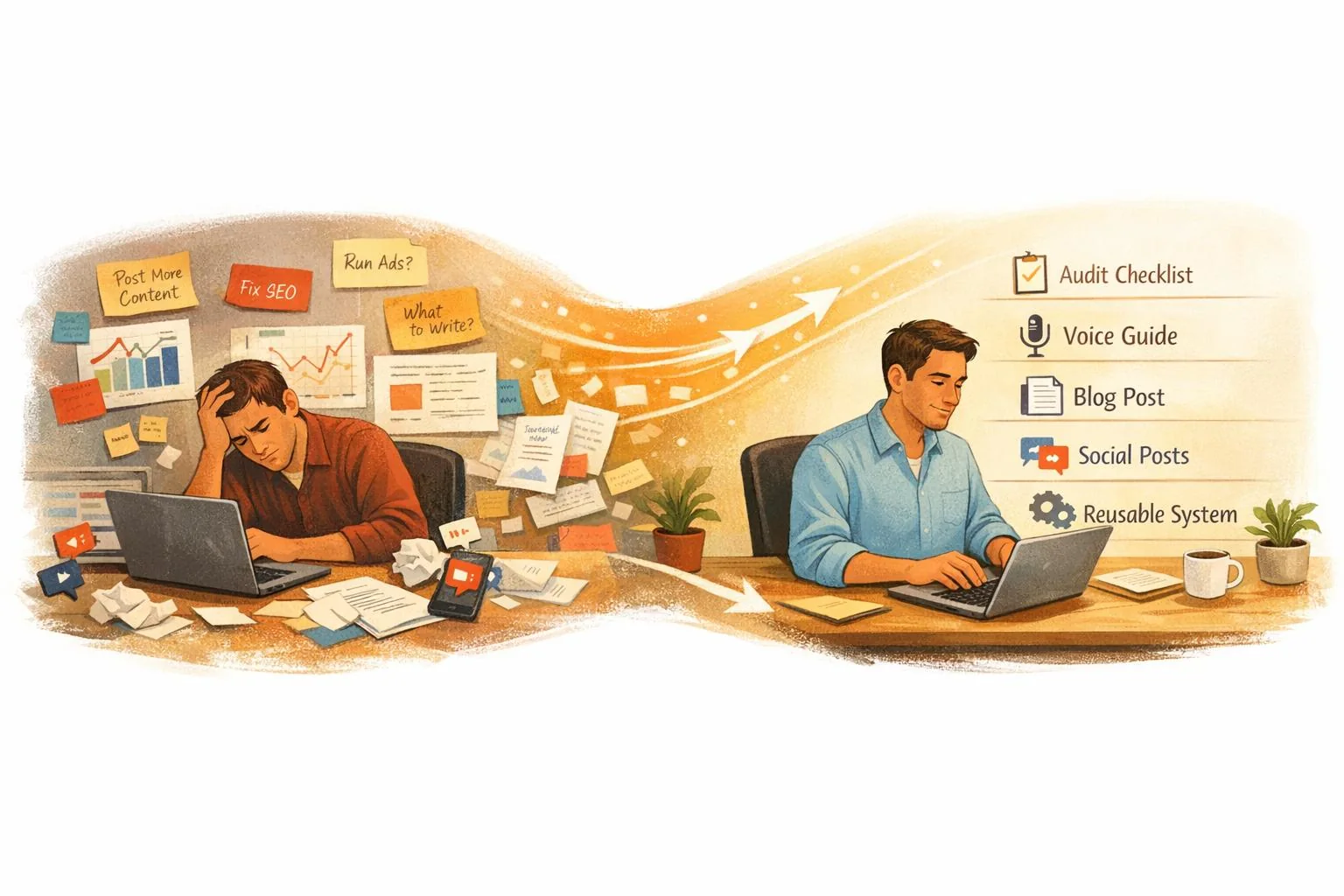
You’ve been paying your marketing agency every month. The reports come in on schedule. Traffic is up. Impressions are up. Followers are growing. The agency is busy and the numbers keep moving in the right direction.
And yet your sales look pretty much the same as they did before you hired them.
If that feels familiar, here’s the first thing worth understanding: the reports aren’t wrong. Traffic is up. Impressions are up. Those numbers are probably accurate. The problem is that none of them answer the question you actually need answered.
The question most agencies never ask
Traffic is a metric the agency controls. They can run ads and drive traffic. They can post content and grow followers. They can optimize pages and improve impressions. All of that shows up in a report and looks like progress.
What those metrics don’t show is whether anyone who showed up because of the marketing ever became a customer.
The question that matters is this: can you point to specific revenue that came in because of the marketing — revenue you would not have gotten without it?
Most business owners, when they think carefully about it, can’t answer that question. Not because the marketing didn’t produce anything, necessarily. Because the system was never set up to track the connection between marketing activity and business outcomes.
When I sit down with a prospective client who is currently paying an agency, that’s the first question I ask. And the answer tells me almost everything I need to know.
What happened when a roofing company asked it
A roofing company owner came to me after eight months with another agency. He was spending $10,000 a month — $80,000 total by the time we talked. He said the business had done more than $100,000 in revenue over that period and figured the marketing was paying off.
I asked him the question.
Was that revenue connected to the marketing? Or was it revenue the business would have gotten anyway from existing customers, referrals, and repeat work — regardless of whether a single ad had run?
He went quiet. He started thinking through the actual sources of that revenue: where the jobs had come from, which customers were new versus returning, whether anything in that period traced back to a campaign. After a minute, he said revenue for the period was actually flat. Maybe a slight decline. Best he could tell, none of the $80,000 had produced a measurable change in sales.
The agency had been reporting traffic. Nobody had asked the question he should have been asking from the start.
Why this happens so often
Marketing agencies are paid to execute. They’re hired to run ads, manage social, produce content, improve SEO rankings. They’re good at those things, and those are the metrics they report on because those are the metrics they can influence.
Connecting their activity to your revenue is harder. It requires tracking infrastructure on your website, conversion measurement, and a clear model of how your marketing and your sales process connect. Most agencies don’t build that infrastructure because it’s not what they were hired to do. Some don’t build it because it would make it easier to evaluate whether their work is actually producing results.
The roofing company didn’t have that infrastructure. There was no way to see whether a visitor who clicked an ad ever called, submitted a form, or booked a job. Without that connection, the reports could only ever show activity. Never outcomes.
What measuring what’s working actually looks like
After we took on that roofing company, the first thing we did was install the measurement system — not run more ads, not redesign the website, not produce more content. Set up the tracking that would let us see what was happening on their site, where visitors were coming from, and which of those visitors were turning into leads.
Within a few months, we had a picture of what was actually driving their business. We could see which pages were leading to contact form submissions, which traffic sources were producing real leads versus just visits, and where the drop-offs were happening. We started optimizing toward those specific things rather than toward traffic numbers.
Their words after a few months: they’d already gotten more value from this work than from eight months with the previous agency, at a fraction of the cost.
That’s not because we’re better marketers. It’s because we were measuring the thing that matters and adjusting based on what the data showed.
What to do if you’re in this situation right now
If you’re paying an agency and you can’t answer the revenue question, start there. Not with canceling the contract or switching agencies — with understanding what the measurement gap is and how to close it.
The free OSM Audit walks through your entire marketing setup, including your measurement and tracking, and tells you specifically what’s missing and what it’s costing you.
If the audit confirms what you suspect — that you’ve been paying for activity rather than results — that’s the conversation to have before you spend another month at the current rate.
For current website and content service options, see the OSM service.